https://doi.org/10.36253/jep-20880
Understanding the role of artificial intelligence in luxury brand management
Department of Management, University of Turin, Italy
Email: valentina.chiaudano@unito.it; hafsashakil0@gmail.com
*Corresponding author
Abstract. This study conducts a systematic literature review to examine how artificial intelligence (AI) is reshaping luxury brand management. It analyses 79 peer-reviewed articles identified through a structured search in Scopus, combining bibliometric techniques with qualitative content analysis. Findings show a rapid increase in publications after 2020, driven by luxury firms’ accelerated digital transformation and adoption of data-driven tools. Four main themes structure the current research: how AI shapes consumer behaviour and human–machine interaction; the role of intelligent systems in luxury retail and distribution; the use of sentiment analysis and automation in hospitality; and the impact of big data and generative AI on branding. Across these areas, AI emerges as a new source of value creation, influencing perceptions of authenticity, exclusivity, and emotional engagement. The review introduces a hybrid-intelligence perspective, highlighting how human and algorithmic capabilities jointly shape luxury experiences, and outlines key managerial implications and future research needs.
Keywords: Artificial Intelligence, AI, luxury brand management, literature review, digital transformation.
Contents
3.2. Co-occurrence network and content analysis
3.2.1. Artificial Intelligence, consumption behavior, and human-machine interaction
3.2.2. AI, retailing, and luxury distribution
3.2.3. Sentiment analysis and customer experience in luxury hospitality
3.2.4. Luxury branding, social media, and big data
1. Introduction
Historically, the luxury experience has been anchored in physical environments such as flagship stores, carefully curated interiors, and selective distribution channels, where value is conveyed through sensory richness, artisanal excellence, and highly personalised, human-centred interactions (Kapferer & Bastien, 2025; Kapferer & Bastien, 2013). Within this context, early digital technologies appeared misaligned with the logic of luxury: the openness, mass accessibility, and standardised nature of the internet seemed to undermine the sector’s symbolic foundations and its reliance on controlled, exclusive access (Chandon et al., 2016; Mosca & Civera, 2017).
As digital capabilities expanded, however, luxury brands gradually adopted integrated online–offline strategies, developing e-commerce platforms, social media ecosystems, and omnichannel experiences that extended the brand narrative without compromising exclusivity (Kim et al., 2015). The transition toward digitalisation accelerated further during the COVID-19 pandemic, which forced luxury companies to rethink their operational and communication models. With store closures and the halt of international travel, digital and hybrid channels became essential to maintaining consumer engagement (Sanz-Lopez et al., 2024). In response, leading luxury brands intensified their investments in e-commerce, mobile applications, social media communities, and virtual experiences, incorporating these channels into every stage of the customer journey (Achille & Zipser, 2020; Xie & Youn, 2020).
Building upon this digital shift, the luxury industry has recently entered a new stage in which artificial intelligence (AI) plays a central role in redefining value creation, creativity, and consumer experience. AI-based systems allow brands to collect and interpret vast quantities of data, predict consumer behavior, and personalize interactions at an unprecedented scale (Han & Xu, 2025; Xu & Mehta, 2022; Huang & Rust, 2021). From predictive analytics to generative algorithms, AI introduces new forms of automation and co-creation that reshape both operational efficiency and how organisations generate meaning and value (Davenport & Ronanki, 2018; Shrestha et al., 2021; Brynjolfsson & Mitchell, 2017; Dwivedi et al., 2023). In luxury settings, machine learning, natural language processing, and computer vision increasingly support design, retail, communication, and service delivery, transforming how firms conceptualise exclusivity and emotional resonance (Essiz, 2023; Joy et al., 2022; Oc et al., 2023; Minor et al., 2025). In this rapidly evolving landscape, luxury once again faces the need to safeguard the uniqueness of its experience, as the very notion of authenticity is being reshaped. Rather than resisting technology, contemporary luxury must ensure that the integration of algorithmic intelligence remains fully aligned with the brand’s cultural, aesthetic, and artisanal heritage, thereby preserving, rather than weakening, the symbolic depth of the luxury experience (Xu & Mehta, 2022; Pantano et al., 2024; Joy et al., 2022). Thus, luxury brands stand at a critical juncture where technological innovation intersects with the cultural, symbolic, and experiential foundations of luxury (Moisello & Pellicelli, 2025; Standish et al., 2024). This evolution requires managers to integrate advanced digital and AI-driven tools while safeguarding the symbolic depth and experiential exclusivity that remain central to luxury’s identity (Cenizo, 2025).
Despite the growing managerial relevance of AI in luxury brand management, the academic literature remains fragmented, conceptually dispersed, and methodologically uneven (Moisello & Pellicelli, 2025; Thanasi-Boçe & Al-Issa, 2025; Pantano et al., 2024). Existing studies often focus on specific domains without offering an integrated understanding of how AI collectively redefines the logic of luxury. Moreover, the literature lacks a comprehensive synthesis of theoretical perspectives, leaving unresolved questions about the mechanisms through which intelligent systems influence symbolic value, consumer experience, and managerial practice (Liu & Zhao, 2025; Thanasi-Boçe & Al-Issa, 2025; Pantano et al., 2024).
To address this gap, this study conducts a systematic literature review of peer-reviewed articles on artificial intelligence and luxury brand management. Following the methodological guidelines of Massaro et al. (2016), it integrates bibliometric mapping with qualitative content analysis to identify key conceptual domains, trends, and research trajectories. Specifically, the review seeks to answer three interrelated questions:
- 1)What are the main impacts of artificial intelligence on luxury brand management?
- 2)How has academic literature approached AI within luxury contexts?
- 3)In which areas of luxury management is AI most frequently applied, and what theoretical and managerial insights do these applications provide?
By addressing these questions, the study maps the evolution, distribution, and disciplinary orientation of research on AI in luxury, identifying the journals, authors, and countries driving this field. Theoretically, it organises the fragmented knowledge base into four coherent research clusters that reflect how AI reshapes consumption behaviour, retailing and distribution, hospitality, and branding.
2. Methodology
Building on the theoretical foundations discussed above, this paper aims to deepen the understanding of how artificial intelligence influences luxury brand management by conducting a review that integrates bibliometric and content analyses. According to Massaro et al. (2016), combining quantitative and qualitative approaches enhances transparency, internal consistency, and replicability. This mixed-method design is particularly suitable for emerging research domains, such as the intersection of AI and luxury brand management, where existing studies are often fragmented across disciplines and lack a coherent conceptual framework (Massaro et al., 2016; Secinaro et al., 2021; Secundo et al., 2021).
The review process was structured as follows. First, a comprehensive search was conducted in the Scopus database using specific search terms applied to titles, abstracts, and keywords. The initial search returned 780 studies published in English up to October 31, 2025, when the research on Scopus was conducted. The search query was defined as follows:
(TITLE-ABS-KEY (luxury) AND TITLE-ABS-KEY (“artificial intelligence” OR “AI” OR “generative AI” OR “large language model*” OR LLM* OR “machine learning” OR ML OR “deep learning” OR “neural network*” OR “natural language process*” OR NLP OR “computer vision” OR “expert system*” OR “knowledge-based system*” OR “intelligent agent*” OR “fuzzy logic” OR “reinforcement learning” OR “predictive analytics” OR “data mining” OR “decision support” OR “recommender system*” OR chatbot* OR “conversational agent*” OR robot* OR “service robot*” OR “autonomous system*”)).
To ensure conceptual alignment with the research objective, only documents indexed under Business, Management, and Accounting were retained, resulting in a refined sample of 183 studies. Additionally, only English-language publications were considered to guarantee analytical consistency (Vrontis & Christofi, 2021). The review focused exclusively on peer-reviewed journal articles, which are generally recognized for their methodological rigor and theoretical robustness (Kraus et al., 2020), yielding a total of 109 papers.
Subsequently, titles, abstracts, and, when necessary, full texts were screened to verify their relevance to the applications or implications of AI within the luxury industry. Studies addressing general digitalisation, analytics, or non-luxury contexts without a clear reference to artificial intelligence were excluded to maintain thematic coherence. This process resulted in a final sample of 79 articles representing the current state of the art in research on AI in the luxury sector.
Each article was systematically recorded in a structured dataset exported from Scopus, including comprehensive bibliographic, citation, and abstract information. The subsequent bibliometric and content analyses were conducted using the Bibliometrix package in R (Aria & Cuccurullo, 2017), which enabled the mapping of annual scientific production, leading journals and documents, country contributions, keyword frequencies, and co-occurrence networks. The co-occurrence analysis revealed four main research clusters, representing the core thematic areas of scholarship on AI and luxury. In the second phase, a directed content analysis was conducted to refine and validate the bibliometric findings. Each paper was carefully reviewed to identify its main thematic contributions, which were then used to populate the four clusters that emerged from the co-occurrence analysis. All qualitative coding activities were logged in a shared Excel dataset accessible to all members of the research team and an independent auditor for cross-checking accuracy (Creswell 2003).
3. Results
3.1. Descriptive analysis
The analysis of academic publications exploring the intersection between AI and luxury brand management reveals a relatively young but rapidly expanding field of research (Figure 1). Throughout the early 2000s, scholarly attention to the topic was limited, with only a few isolated studies addressing digital innovation within the luxury sector. The growing adoption of machine learning, big data analytics, and conversational technologies by luxury companies around 2016 marked a decisive turning point, as researchers began to investigate AI’s transformative potential. From 2020 onwards, the number of studies increased profoundly, reflecting the post-pandemic acceleration of digital transformation across luxury industries. Between 2020 and 2023, scholarly production expanded significantly, increasing from a few initial contributions to over twenty publications per year, and culminating in 2025 with the identification of seventy-nine peer-reviewed journal articles focusing on AI within the luxury sector. This pronounced growth reflects the consolidation of AI as a distinctive and emerging research domain in luxury studies, while underscoring the increasing academic engagement with its implications for brand strategy and value creation.
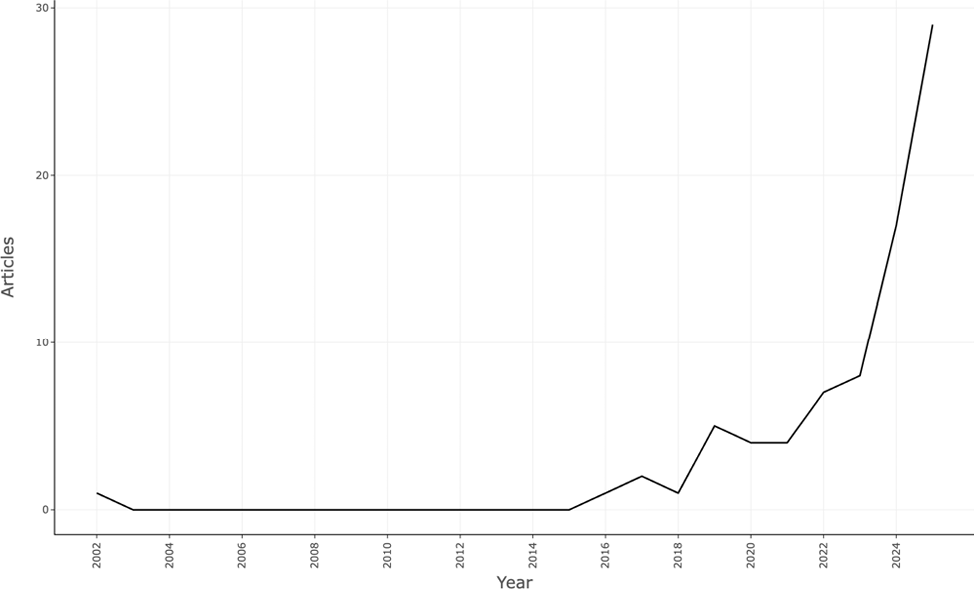
Table 1 shows the distribution of academic publications on AI in the field of luxury brand management. The data confirm that this research area is still fragmented, with publications dispersed across a limited number of specialized sources. The Journal of Retailing and Consumer Services clearly dominates the field with 13 articles, indicating that the consumer-facing applications of AI, particularly in luxury retail, have received the most attention. The International Journal of Hospitality Management (5 articles) and the International Journal of Contemporary Hospitality Management (4 articles) follow, reinforcing the importance of hospitality and service innovation within luxury research, especially where AI enhances personalization and customer experience. Journals like the Journal of Business Research and the Journal of Hospitality and Tourism Technology (3 articles each) show a balanced integration of managerial and technological approaches, bridging AI’s operational and strategic implications. Finally, outlets such as Global Business Review, Strategic Change, and Tourism and Hospitality Research (2 each) demonstrate an emerging interdisciplinary interest, connecting AI adoption with organizational transformation and tourism-related luxury experiences. The large “Others” category (43 articles) further underscores that this is an emerging and diversifying research domain, still seeking consolidation within mainstream academic outlets.
| Sources | Articles |
|---|---|
| Journal Of Retailing And Consumer Services | 13 |
| International Journal Of Hospitality Management | 5 |
| International Journal Of Contemporary Hospitality Management | 4 |
| Journal Of Business Research | 3 |
| Journal Of Hospitality And Tourism Technology | 3 |
| Global Business Review | 2 |
| Journal Of Hospitality And Tourism Insights | 2 |
| Strategic Change | 2 |
| Tourism And Hospitality Research | 2 |
| Others | 43 |
Table 2, related to the geographical distribution of publications, shows that research on AI in the luxury sector is concentrated in a few leading countries, with growing global participation. The United States (28), China (23), and South Korea (21) dominate the field, reflecting their leadership in technological innovation and AI development. In Europe, the United Kingdom (13), Italy (7), and France (5) stand out, consistent with their historical strength in luxury branding. Emerging contributions from countries such as India, Egypt, and several Asian and Middle Eastern nations indicate a gradual diversification of the research landscape. Overall, the data suggest that while AI–luxury studies are still concentrated in technologically advanced and economically mature markets, the topic is gaining traction worldwide, signalling an increasingly international and interdisciplinary field
| Country | Frequency |
|---|---|
| Usa | 28 |
| China | 23 |
| South Korea | 21 |
| Uk | 13 |
| India | 13 |
| Australia, Italy | 7 |
| Egypt, France | 5 |
| Canada, Jordan, Portugal, Spain, Thailand | 4 |
| Malaysia, Singapore | 3 |
| Bangladesh, Croatia, Finland, Greece, Japan, Oman, Serbia | 2 |
| Austria, Belgium, Cyprus, Germany, Indonesia, Iran, Ireland, Mexico, Monaco, New Zealand, Pakistan, Qatar, Slovenia, South Africa, Sweden, United Arab Emirates, Uzbekistan | 1 |
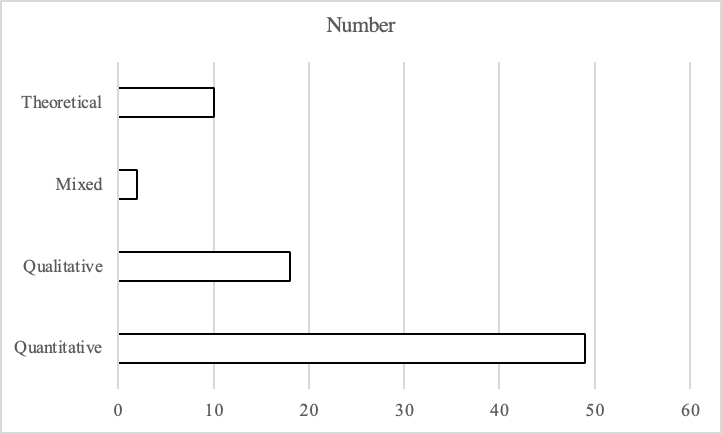
Considering the methodologies adopted by studies on AI and luxury management (Figure 2), most of the analysed papers employ a quantitative approach (49 papers), relying on surveys, experiments, and statistical models such as SEM, PLS-SEM, or regression analysis to investigate perceptions, adoption intentions, and the impacts of AI in the luxury and hospitality sectors. A smaller number of studies adopt qualitative methods (18), based on semi-structured interviews and thematic or content analysis, with exploratory or theory-building aims to understand the psychological and symbolic dynamics of human–AI interaction. Only two papers use mixed methods, combining qualitative and quantitative phases to triangulate findings, while ten contributions are theoretical or conceptual, focusing on the development of interpretative frameworks and reflections on the role of AI and emerging technologies in reshaping business models and customer experiences.
The word cloud (Figure 3) synthesizes the main conceptual domains emerging from the intersection between artificial intelligence and the luxury industry. The central prominence of the term “artificial intelligence” denotes its function as a connective construct linking technological, managerial, and behavioral dimensions of inquiry. Closely related expressions such as “consumption behaviour,” “consumer behaviour,” and “retailing” reflect a growing scholarly interest in the transformative effects of AI on consumption patterns, decision-making processes, and value creation within luxury ecosystems. The recurrence of terms such as ‘luxury hotels,’ ‘luxury brands,’ and ‘luxury retail’ positions the discussion within hospitality and retail contexts, where AI is predominantly examined as an enabling factor for personalisation, experiential innovation, and the co-creation of symbolic and functional value.
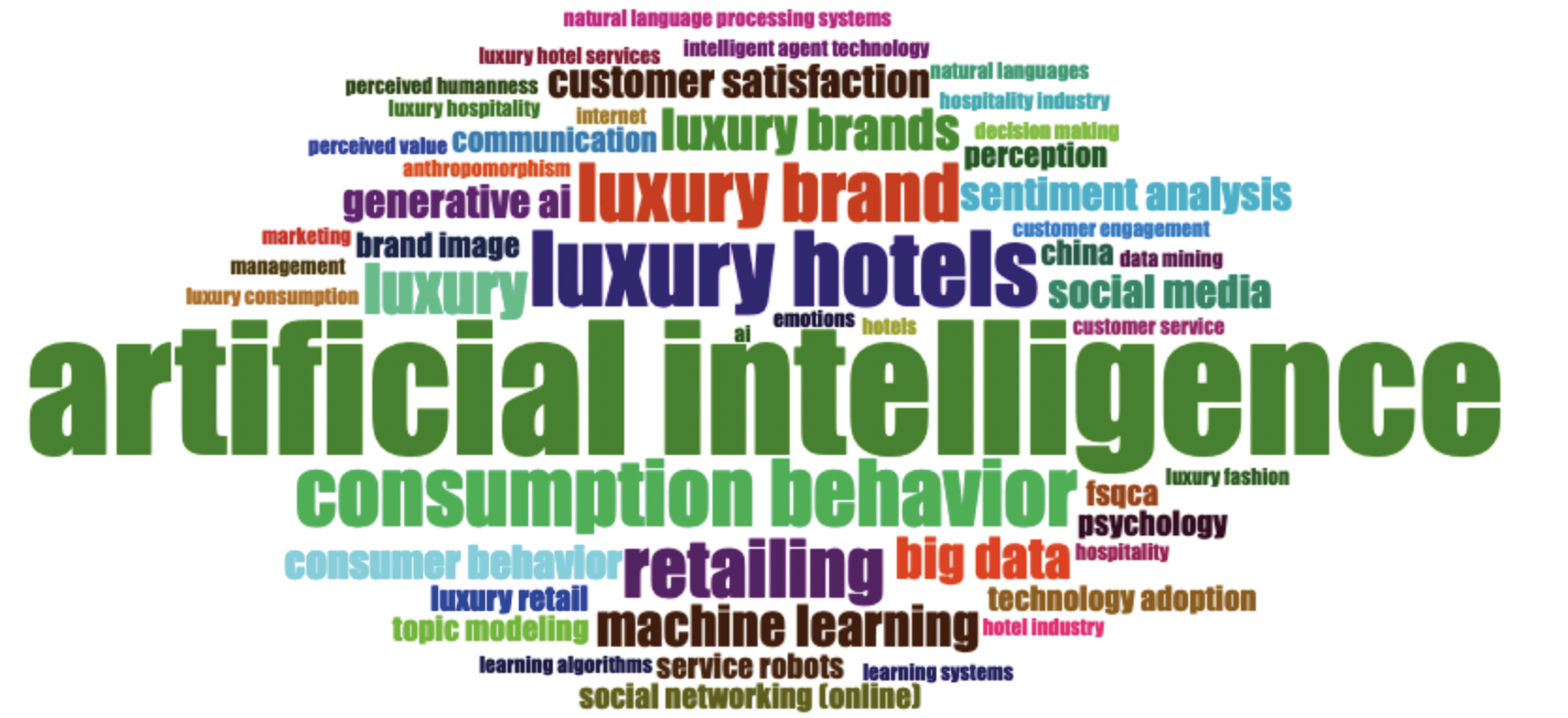
From a technological standpoint, the presence of terms such as “machine learning,” “big data,” and “generative AI” indicates that contemporary research emphasizes the algorithmic and data-driven infrastructures underpinning AI applications in luxury contexts. Simultaneously, the occurrence of “social media,” “sentiment analysis,” and “communication” suggests a parallel focus on the discursive and affective dimensions of AI-mediated brand–consumer relationships, in which digital interaction and emotion analytics become central to the construction of luxury meaning. References to “service robots,” “technology adoption,” and “customer satisfaction” highlight a further line of inquiry concerned with operational efficiency, human–machine interaction, and the experiential redefinition of service quality.
Overall, the word cloud reveals an emerging, interdisciplinary research stream in which technological innovation converges with behavioral and managerial analysis. The visualization illustrates how AI is progressively reconfiguring luxury consumption and production logics, fostering hybrid forms of intelligence that integrate human creativity with algorithmic agency, and inaugurating new paradigms of value creation, personalization, and symbolic engagement within the luxury sector.
3.2. Co-occurrence network and content analysis
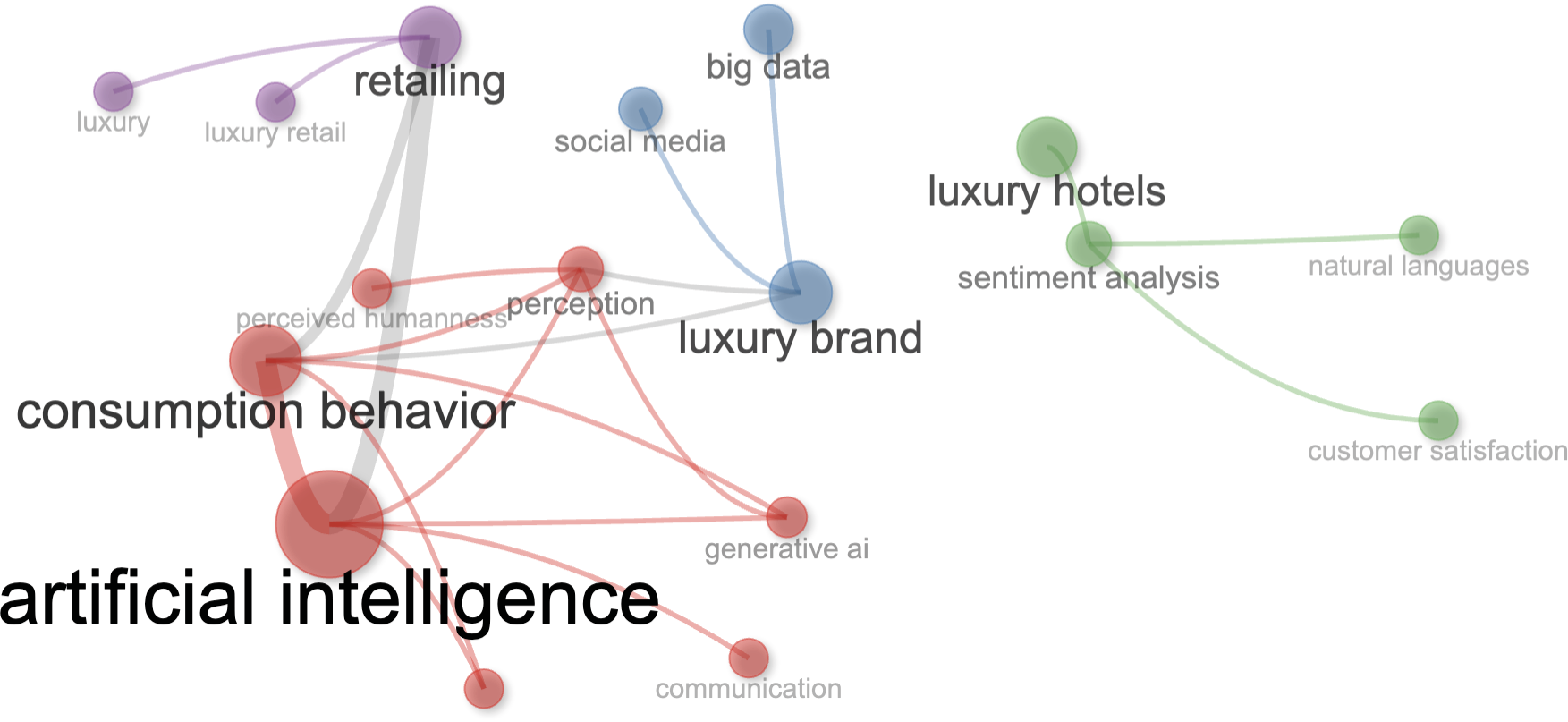
While the word cloud provides an overview of the most frequent terms, the keyword co-occurrence network offers a more structured understanding of how concepts interconnect within the literature. The network revealed four distinct thematic clusters, each representing a major conceptual and theoretical direction within the research on artificial intelligence and luxury brand management (Figure 4). Following the identification of these clusters, a directed content analysis was performed, as described in the methodology section, to validate and interpret their conceptual boundaries.
3.2.1. Artificial Intelligence, consumption behavior, and human-machine interaction
The first cluster explores how artificial intelligence shapes consumption behavior and human–machine interaction in luxury contexts. Scholars increasingly conceptualize AI not merely as a functional tool but as an affective actor that mediates the relationship between consumers and luxury brands (Kim et al., 2015; Cho & Chen, 2025). Through conversational agents, recommendation systems, and generative AI applications, consumers encounter technologically enhanced forms of personalization that evoke both fascination and ambivalence. These interactions redefine traditional constructs such as trust, empathy, and authenticity, central to the symbolic experience of luxury.
Existing studies demonstrate that AI can enhance perceived exclusivity and satisfaction by offering hyper-personalized recommendations and emotionally adaptive responses (Li and Kang, 2025; Han & Xu, 2025). At the same time, research reveals that excessive automation may reduce the sense of human warmth and weaken the perceived craftsmanship that underpins luxury value (Suganthi & Jasim, 2024). The emotional dissonance generated by anthropomorphized AI, neither fully human nor purely mechanical, emerges as a defining challenge in luxury experience design. Furthermore, scholars note that generative and affective AI systems are beginning to participate actively in co-creating symbolic value, transforming consumers from passive recipients into co-authors of meaning (Minor et al., 2025). This participatory dynamic suggests that AI-human relationships in luxury may evolve toward hybrid models of emotional co-production.
3.2.2. AI, retailing, and luxury distribution
The second cluster focuses on the transformative effects of artificial intelligence on luxury retailing and distribution, where technological innovation increasingly intersects with spatial design, customer engagement, and brand heritage. Studies in this area show how AI-driven systems, from predictive analytics to computer vision, are redefining the physical and digital dimensions of luxury retail environments (Jung et al., 2025; Hoang et al., 2025). Intelligent platforms enhance inventory management, personalize product recommendations, and orchestrate seamless omni-channel journeys that merge in-store and digital touchpoints (Wu et al., 2021).
While these applications promise efficiency and convenience, scholars emphasize that luxury retailing must remain rooted in sensory and emotional experiences (Roy et al., 2020; Marinakou, 2024). Research suggests that the most successful implementations of AI occur when technological precision enhances, rather than substitutes, the aesthetic and relational qualities of the shopping experience (Essiz, 2023). For example, interactive mirrors, virtual stylists, and adaptive lighting systems powered by AI contribute to crafting personalized atmospheres that reinforce brand exclusivity. Yet, these innovations also raise new questions about the balance between automation and human connection – an equilibrium critical to preserving the essence of luxury service.
In parallel, AI is enabling new forms of phygital retailing, where physical stores act as experiential hubs supported by data-driven personalization (Joy et al., 2022). These hybrid formats transform stores into dynamic spaces for storytelling, co-creation, and cultural immersion, blending technological sophistication with the symbolic aura of luxury.
3.2.3. Sentiment analysis and customer experience in luxury hospitality
This cluster explores the integration of Artificial Intelligence in luxury hospitality, combining analytical, experiential, and operational perspectives. Within this domain, AI technologies such as sentiment analysis, natural language processing, and service robotics are employed to enhance the emotional, relational, and functional dimensions of guest experience. The literature demonstrates how data-driven intelligence and automation are jointly redefining the meaning of service excellence in high-end hospitality, transforming the traditional model of human-centered care into a hybrid system of human–machine collaboration (Li & Khan, 2023; Suganthi & Jasim, 2024).
From an analytical standpoint, scholars have widely investigated how intelligent systems monitor and interpret guest emotions, satisfaction, and perceptions of service quality. Through the application of machine learning, text mining, and natural language processing, vast volumes of user-generated content – such as online reviews, booking feedback, and social media posts – are analyzed to extract patterns of sentiment and identify the drivers of guest experience (Wu et al., 2021; Oc et al., 2023). These studies demonstrate that AI-based sentiment analysis provides hotel managers with actionable insights into customer expectations, allowing them to redesign service offerings and communication strategies in real time. The translation of emotional feedback into measurable data supports more adaptive forms of experience management and contributes to building long-term guest relationships (Marinakou et al., 2025; Roy et al., 2020).
Beyond retrospective analysis, AI enables a proactive approach to personalization. Predictive analytics and recommender systems can anticipate guest needs and tailor offers before arrival, optimizing resource allocation and strengthening perceived exclusivity (Khamoushi et al., 2024). In luxury contexts, where attention to detail and emotional resonance are central to value creation, these technologies help transform subjective impressions into operational intelligence. Scholars argue that such anticipatory systems reinforce service precision while maintaining a sense of intimacy, provided that data are managed ethically and transparently (Li & Khan, 2023).
Parallel to these analytical applications, a growing body of research examines the technological embodiment of AI through service robots and automated systems. These studies emphasize how robotics can improve efficiency, reduce errors, and support staff in delivering consistent high-quality service (Roy et al., 2020; Suganthi & Jasim, 2024). Robots are increasingly used for check-ins, concierge support, and amenity delivery, extending the scope of automation beyond back-office operations to the guest interface (Chan & Tung, 2019). However, this integration raises critical tensions between efficiency and emotional authenticity. As automation enters the front stage of luxury service, the risk of diminishing the human warmth and symbolic value associated with hospitality becomes more evident (Li & Khan, 2023; Khamoushi et al., 2024).
Recent studies respond to this tension by proposing the concept of hybrid hospitality, in which human employees and intelligent machines collaborate to create an emotionally balanced and operationally optimized experience (Hoang et al., 2025). Within this model, AI does not replace human interaction but augments it, allowing employees to focus on empathy, creativity, and personalization while machines handle repetitive or data-intensive tasks. Research on customer acceptance of robotic services further shows that satisfaction and loyalty depend on perceived humanness, trust, and the novelty of interaction (Cho & Chen, 2025; Kim et al., 2015).
From a managerial perspective, the integration of AI and robotics requires profound organizational adaptation. Scholars underline the importance of staff training, workflow redesign, and ethical governance to ensure smooth human–AI collaboration (Li & Khan, 2023). Implementing robotic systems also entails cultural and symbolic considerations, as luxury brands must preserve their narrative of refinement and care while embracing technological innovation. When effectively managed, AI and robotics can complement human service, creating a synergistic ecosystem where operational excellence coexists with emotional depth.
3.2.4. Luxury branding, social media, and big data
The fourth cluster connects luxury branding, social media, and big data, illustrating how artificial intelligence is reshaping communication, creativity, and value construction in the luxury sector. Within this domain, AI serves not only as an analytical instrument but also as a co-creator of symbolic meaning. Through machine learning and big data analytics, luxury brands can decode vast amounts of consumer information, identify emerging cultural patterns, and adapt their narratives in real time to align with evolving audience expectations (Oc et al., 2023; Minor et al., 2025). Predictive algorithms and natural language processing facilitate the optimization of content resonance across multiple touchpoints, allowing brands to orchestrate coherent and emotionally engaging storytelling (Jang et al., 2023; Wu et al., 2021).
Scholars highlight that this data-driven creativity enhances personalization, enabling brands to offer experiences that feel both exclusive and emotionally relevant (Essiz, 2023; Roy et al., 2020). Yet, a growing body of research warns that algorithmic mediation can distort symbolic depth: as automated engagement metrics privilege visibility and virality, they risk reducing luxury to a performative construct detached from its artisanal and cultural foundations (Cenizo, 2025; Joy et al., 2022). This tension underscores a central paradox of AI-driven branding – between technological efficiency and cultural authenticity. Recent studies also note that AI tools such as generative models and recommender systems are being employed to support creative direction, visual design, and storytelling coherence (Han & Xu, 2025; Marinakou, 2024). These technologies contribute to new forms of hybrid creativity, in which human intuition and algorithmic intelligence co-produce content.
Consequently, the role of creative professionals is evolving toward ethical mediation and curatorial oversight of AI outputs, requiring interdisciplinary expertise that blends technological awareness with artistic and cultural literacy. At the same time, the increased reliance on data-driven systems raises ethical and managerial questions regarding privacy, manipulation, and transparency in algorithmic branding (Joy et al., 2022; Suganthi & Jasim, 2024). Therefore, this cluster captures the strategic and communicative dimension of AI in luxury: a field where data intelligence and cultural meaning must be harmonized to sustain the emotional and symbolic value that defines luxury brands.
4. Implications
Our systematic review of 79 peer-reviewed articles identifies the conceptual domains, applications, and research directions, contributing to a young yet rapidly evolving research field at the intersection of artificial intelligence and luxury brand management. Our analysis highlights two distinct growth phases in the field of artificial intelligence in luxury brand management with limited scholarly attention through the early 2000s, followed by a decisive turning point around 2016, notably through increased industry adoption of machine learning and data analytics, and a pronounced acceleration from 2020 onwards, aligning with the acceleration of digital-transformation catalyzed by COVID-19 pandemic, yielding over twenty publications annually by 2023 and eighty peer-reviewed contributions by 2025. This expansion reflects growing managerial relevance and corresponds with the shifting needs of the luxury industry at the time. First, to maintain brand prestige and customer intimacy in a physically distanced world, like other industries, the luxury industry invested heavily in digital transformation. The post-pandemic strategic capital flow, both through government and private bodies, to support AI innovations, such as virtual try-ons, supply chain automation, and creative content generation. Together, these catalysts fostered an environment where both industry practice and academic scrutiny of AI in luxury could thrive. However, despite this growing interest, the literature remains characterized by geographic concentration (90% of publications from three countries: United States, China, and South Korea) and dispersal across specialized outlets within retail, hospitality, and management disciplines, with the Journal of Retailing and Consumer Services accounting for 16% of the corpus and the remaining 53% distributed across secondary and tertiary venues.
Theoretically, our review advances understanding of artificial intelligence within luxury brand management by reconceptualizing AI beyond instrumental functionality. The literature positions AI not merely as an enabler of operational efficiency and personalization but increasingly as a participant in processes of meaning creation and value co-production across four identifiable thematic clusters: consumption behavior and human–machine interaction, retailing and distribution, hospitality service experience, and social media branding. Studies in our selected collection document how intelligent systems mediate symbolic exchange, influence aesthetic and emotional resonance, and reshape consumer perceptions of exclusivity and authenticity, thereby reconfiguring the experiential foundations of luxury itself (Kim et al., 2015; Joy et al., 2022; Oc et al., 2023; Minor et al., 2025).
With our analysis, we demonstrate that recent literature has expanded beyond established theories of value co-creation and symbolic interactionism by acknowledging artificial intelligence as an active participant in the production of meaning and the orchestration of luxury experiences. Analysis of the corpus reveals that AI-enabled systems are increasingly conceptualized not simply as automated tools but as non-human agents that influence narrative construction, personalization, and sensory engagement, particularly through applications in branding, retail, hospitality, and digital communication. Several studies propose the emergence of a “hybrid intelligence” paradigm, within luxury management, wherein AI is positioned as a complement to – rather than a substitute for – human creativity and expertise. In this framework, value creation is presented as a process of dynamic collaboration, where technological capabilities (including predictive analytics, generative models, and emotion recognition) intersect with intuition, aesthetic judgment, and cultural interpretation to produce new forms of symbolic and experiential value (Cenizo, 2025; Essiz, 2023; Han & Xu, 2025). The literature thus foregrounds the interplay between algorithmic and human actors as central to contemporary luxury, challenging the longstanding dichotomy between digital innovation and the artisanal foundations of luxury. When implemented with ethical consideration and creative oversight, these hybrid configurations are reported to amplify, rather than diminish, the perceived authenticity and emotional impact of luxury offerings. As a result, the enduring value of luxury is increasingly theorized as contingent upon a brand’s capacity to synthesize technological intelligence with the emotional and narrative coherence that define its symbolic capital.
This reconceptualization extends theories of value co-creation and symbolic interactionism by recognizing non-human intelligence as an active agent in meaning production and experiential design. The integration of AI into luxury management also points to the emergence of what can be described as a hybrid-intelligence paradigm. Rather than displacing human creativity, AI intersects with it, producing new forms of value through the fusion of technological affordances, emotional resonance, and cultural symbolism. Luxury experiences now emerge from the dynamic interplay between prediction and intuition, automation and artistry, data and desire (Cenizo, 2025; Essiz, 2023; Han & Xu, 2025). This hybrid configuration challenges the dichotomy between digital and human, demonstrating that technology can amplify rather than erode the aesthetic and affective intensity of luxury when ethically and creatively orchestrated. The value of luxury thus becomes contingent on the ability to harmonize technological intelligence with the emotional and narrative coherence of the brand.
A second theoretical contribution lies in clarifying the mechanisms through which AI shapes consumer experience and value perception. The synthesis of existing research highlights how constructs such as perceived humanness, algorithmic empathy, and anticipatory personalization are becoming central to understanding luxury interactions (Kim et al., 2015; Li & Khan, 2023; Suganthi & Jasim, 2024; Cho & Chen, 2025). In AI-mediated environments, exclusivity and attachment depend not only on scarcity and craftsmanship but also on the perceived humanity of the interface and the transparency of its logic. By integrating these mechanisms, the review enriches experiential and relational theories of luxury, suggesting that emotional engagement in AI-driven contexts derives from the degree to which technology embodies empathy and moral awareness. This reconfiguration of value production also demands a rethinking of authenticity, a cornerstone of luxury theory. The findings suggest that authenticity in the age of intelligent automation can no longer be defined by the absence of technology but by its ethical and aesthetic alignment with the brand’s heritage. The concept of “curated authenticity” captures this shift, framing authenticity as the outcome of a deliberate process of mediation between human and algorithmic intelligences (Joy et al., 2022; Cenizo, 2025). In luxury branding and communication, this implies maintaining creative oversight and narrative coherence even when content is generated through AI systems, while in hospitality and retail, it calls for the design of experiences that preserve warmth, empathy, and discretion despite automation. Authenticity becomes a relational construct, one that emerges from the balance between technological mediation and human intentionality.
4.1. Managerial implications
From a managerial standpoint, the review underscores the urgent need for luxury firms to develop human-centered strategies that balance algorithmic precision with emotional depth. Managers are now required to navigate a dual imperative: leveraging AI for predictive intelligence and operational efficiency while preserving the artisanal, aesthetic, and symbolic attributes that define luxury.
AI can enhance personalization, forecasting, and creative design, but excessive reliance on data risks eroding the sense of exclusivity and intimacy central to luxury brands (Joy et al., 2022; Suganthi & Jasim, 2024). To address this, organizations should implement ethical governance frameworks that ensure transparency in data usage, responsible automation, and the supervision of AI-generated content. Moreover, the integration of AI calls for new professional competencies combining technological literacy, artistic sensibility, and ethical awareness. Luxury managers must act as cultural mediators between data science and design, ensuring that automation reinforces – rather than replaces – the human element in value creation (Han & Xu, 2025).
Beyond internal management, the findings also suggest that AI can serve as a bridge between tradition and innovation, allowing brands to reinterpret their heritage for contemporary audiences. Firms that succeed in embedding AI into their creative and communicative processes without compromising authenticity are likely to build stronger, more emotionally resonant relationships with consumers. Thus, AI should be conceived not as a threat to the luxury ethos but as a catalyst for its renewal.
Although the field is rapidly evolving, several conceptual and empirical gaps persist. Future research should develop integrative models capable of explaining how technological intelligence interacts with emotional and symbolic dimensions of luxury. Longitudinal and cross-cultural studies are especially needed to assess how AI adoption shapes perceptions of exclusivity, creativity, and trust across different markets and product categories.
In summary, this study provides a holistic interpretation of AI’s role in luxury management, demonstrating that the intersection of technological intelligence and symbolic value offers fertile ground for both theoretical innovation and managerial experimentation. By bridging emotional resonance, data analytics, and cultural meaning, the field is moving toward a new understanding of luxury as an ecosystem of human–machine creativity. (Table 3)
| Cluster | Future Research Questions |
|---|---|
| AI, Consumption Behavior, and Human–Machine Interaction | – How does AI influence consumers’ emotional attachment, trust, and perceptions of authenticity in luxury experiences? – In what ways does generative AI enable the co-creation of symbolic value between consumers and brands? – Which factors affect consumer acceptance of AI-based personalisation and recommendation systems? |
| AI, Retailing, and Luxury Distribution | – How do predictive analytics and immersive technologies transform the sensory and aesthetic dimensions of luxury retail? – To what extent do AI-driven recommendations modify perceptions of exclusivity and craftsmanship? – How can luxury brands design phygital environments that integrate technology without losing emotional depth? – What managerial models best support the integration of AI across online and offline distribution channels? |
| AI, Hospitality, and Service Experience | – How can AI systems predict guest preferences and personalize luxury hospitality services while maintaining a human touch? – What competencies are required for employees to collaborate effectively with AI and robotic systems? – How do privacy, data transparency, and surveillance concerns affect guest trust in AI-enabled hotels? – What ethical frameworks can guide the responsible adoption of AI and service robots in luxury hospitality? |
| AI, Branding, Social Media, and Big Data | – What are the aesthetic and ethical implications of using generative AI for luxury communication and content creation? – How can brands use big data and AI analytics to strengthen emotional resonance without losing artistic control? |
References
Achille, A. & Zipser, D. (2020). A Perspective for the Luxury-Goods Industry During – and After – Coronavirus. McKinsey & Company.
Aria, M. & Cuccurullo, C. (2017). bibliometrix: An R-tool for comprehensive science mapping analysis. Journal of Informetrics, 11(4), 959–975.
Brynjolfsson, E. & Mitchell, T. (2017). What can machine learning do? Workforce implications. Science, 358(6370), 1530–1534.
Cenizo, C. (2025). Redefining consumer experience through artificial intelligence in the luxury retail sector. Journal of Retailing and Consumer Services, 87, 104416.
Chan, A.P.H. & Tung, V.W.S. (2019). Examining the effects of robotic service on brand experience: the moderating role of hotel segment. Journal of Travel & Tourism Marketing, 36(4), 458–468.
Chandon, J.L., Laurent, G. & Valette-Florence, P. (2016). Pursuing the concept of luxury: Introduction to the JBR Special Issue on “Luxury Marketing from Tradition to Innovation”. Journal of Business Research, 69(1), 299–303.
Cho, M.J. & Chen, P.J. (2025). Friend or a Foe: Robot-Based Applications in Luxury Hotel Services. Journal of Hospitality & Tourism Cases, 21649987251333075.
Creswell, J.W., Plano Clark, V.L., Gutmann, M.L. & Hanson, W.E. (2003). Advanced mixed methods research designs. Handbook of Mixed Methods in Social and Behavioral Research, 209(240), 209–240.
Davenport, T.H. & Ronanki, R. (2018). Artificial intelligence for the real world. Harvard Business Review, 96(1), 108–116. https://hbr.org/2018/01/artificial-intelligence-for-the-real-world
Dwivedi, Y.K., Kshetri, N., Hughes, L., Slade, E.L., Jeyaraj, A., Kar, A.K., … & Wade, M. (2023). “So what if ChatGPT wrote it?” Multidisciplinary perspectives on opportunities, challenges and implications of generative conversational AI for research, practice and policy. International Journal of Information Management, 71, 102642.
Essiz, O., Yurteri, S., Mandrik, C. & Senyuz, A. (2023). Exploring the value-action gap in green consumption: roles of risk aversion, subjective knowledge, and gender differences. Journal of Global Marketing, 36(1), 67–92.
Godey, B., Manthiou, A., Pederzoli, D., Rokka, J., Aiello, G., Donvito, R. & Singh, R. (2016). Social media marketing efforts of luxury brands: Influence on brand equity and consumer behavior. Journal of business research, 69(12), 5833–5841.
Han, W. & Xu, Y. (2025). “Make an Effort and Show Me the Love!” Understanding Consumer Aversion to AI Fashion Design Through the Lens of Schema Theory. Clothing and Textiles Research Journal, 0887302X251347924.
Hoang, D., Loureiro, S.M.C., Kousi, S. & Martinez, L.F. (2025). Luxury fashion apps: Functional and hedonic customer experiences. International Journal of Consumer Studies, 49(3), e70047.
Huang, M.H. & Rust, R.T. (2021). A strategic framework for artificial intelligence in marketing. Journal of the Academy of Marketing Science, 49(1), 30–50.
Joy, A., Zhu, Y., Peña, C. & Brouard, M. (2022). Digital future of luxury brands: Metaverse, digital fashion, and non‐fungible tokens. Strategic Change, 31(3), 337–343.
Jung, H.S., Yoon, H.H. & Cho, M. (2025). Addressing the needs of an aging workforce in luxury hotels with a focus on perceived job insecurity and AI attitudes. Journal of Hospitality and Tourism Technology.
Kapferer, J.-N. & Bastien, V. (2025). The Luxury Strategy: Break the Rules of Marketing to Build Luxury Brands. 3rd ed. London, England: Kogan Page.
Kim, H., Choi, Y.J. & Lee, Y. 2015. Web Atmospheric Qualities in Luxury Fashion Brand Web Sites. Journal of Fashion Marketing and Management 19 (4): 384–401. https://doi.org/10.1108/jfmm-09-2013-0103.
Kraus, S., Breier, M. & Dasí-Rodríguez, S. (2020). The art of crafting a systematic literature review in entrepreneurship research. International Entrepreneurship and Management Journal, 16(3), 1023–1042.
Li, J. & Kang, J. (2025). Less stress, fewer delays: The role of sophisticated AI in mitigating decision fatigue and purchase postponement in luxury retail. Journal of Retailing and Consumer Services, 85, 104268.
Li, Y. & Khan, M.S. (2023). Impact of perceived organizational support on turnover intention in luxury hotels: The mediating role of the perceived value of artificial intelligence. Vision: The Journal of Business Perspective, 27(3), 314–327.
Liu, Y.J. & Zhao, L. (2025). Understanding Fashion AI Evolution: A Systematic Literature Review of AI Research in the Fashion Industry. In International Textile and Apparel Association Annual Conference Proceedings (Vol. 81, No. 1). Iowa State University Digital Press.
Mangold, W.G. & Faulds, D.J. (2009). Social media: The new hybrid element of the promotion mix. Business Horizons, 52(4), 357–365.
Marinakou, E., Giousmpasoglou, C. & Papavasileiou, E.F. (2024). The use of artificial intelligence (AI) in talent acquisition: The case of Greek luxury hotels. Strategic Change, 34(4), 533–543.
Massaro, M., Dumay, J. & Guthrie, J. (2016). On the shoulders of giants: undertaking a structured literature review in accounting. Accounting, Auditing & Accountability Journal, 29(5), 767–801.
Minor, K., Wheeler, R., Mušanović, J., Dorčić, J. & Bratec, M. (2025). Snap, share, engage: AI-assisted temporal topic and engagement analysis of visual communication of luxury hotels. Journal of Vacation Marketing, 13567667251360433.
Moisello, A.M. & Pellicelli, M. (2025). Sustainable innovation and digitalization in luxury brand management. Economia Aziendale Online, 16(2), 389–412.
Mosca, F. & Civera, C. (2017). The evolution of CSR: An integrated approach. Symphonya. Emerging Issues in Management, 1, 16–35.
Oc, Y., Plangger, K., Sands, S., Campbell, C.L. & Pitt, L. (2023). Luxury is what you say: Analyzing electronic word‐of‐mouth marketing of luxury products using artificial intelligence and machine learning. Psychology & Marketing, 40(9), 1704–1719.
Pantano, E., Serravalle, F. & Priporas, C.V. (2024). The form of AI-driven luxury: how generative AI (GAI) and Large Language Models (LLMs) are transforming the creative process. Journal of Marketing Management, 40(17-18), 1771–1790.
Roy, P., Ramaprasad, B.S., Chakraborty, M., Prabhu, N. & Rao, S. (2020). Customer acceptance of use of artificial intelligence in hospitality services: An Indian hospitality sector perspective. Global Business Review, 25(3), 832–851.
Sanz-Lopez, F., Gallego-Losada, R., Montero-Navarro, A. & García-Abajo, E. (2024). Is the digitalisation the future of the luxury industry? Heliyon, 10(21): e40029. https://doi.org/10.1016/j.heliyon.2024.e40029.
Schivinski, B. & Dabrowski, D. (2016). The effect of social media communication on consumer perceptions of brands. Journal of Marketing Communications, 22(2), 189–214.
Secinaro, S., Calandra, D., Secinaro, A., Muthurangu, V. & Biancone, P. (2021). The role of artificial intelligence in healthcare: a structured literature review. BMC Medical Informatics and Decision Making, 21(1), 125.
Secundo, G., Del Vecchio, P. & Mele, G. (2021). Social media for entrepreneurship: myth or reality? A structured literature review and a future research agenda. International Journal of Entrepreneurial Behavior & Research, 27(1), 149–177.
Seringhaus, F.R. (2005). Selling luxury brands online. Journal of Internet Commerce, 4(1), 1–25.
Shrestha, Y.R., Krishna, V. & von Krogh, G. (2021). Augmenting organizational decision-making with deep learning algorithms: Principles, promises, and challenges. Journal of Business Research, 123, 588–603.
Standish, J., Benichou, A., Galante, A., Ruzzi, A., Bonnefoy, J., Habib, S., Tiezzi, I., Perego, A., Lee, I., Upadhyaya, J.J., Samtani, P., Griggs, D., Kelley, M., Berger, S., Trimble, M. & Verma, P. (2024). Luxe eternal: How luxury brands are reinventing for success. Accenture.
Suganthi, A. & Jasim, K.M. (2024). Understanding the Customers’ Emotions and Experience of Robot-assisted Services in Luxury Hotels and Its Influence on Revisit Intention. Global Business Review, 09721509241299942.
Thanasi-Boçe, M. & Al-Issa, N. (2025). The secondary luxury market: a systematic review and theoretical integration. Cogent Business & Management, 12(1), 2523405.
Vrontis, D. & Christofi, M. (2021). R&D internationalization and innovation: A systematic review, integrative framework and future research directions. Journal of Business Research, 128, 812–823.
Wu, D.C., Zhong, S., Qiu, R.T. & Wu, J. (2022). Are customer reviews just reviews? Hotel forecasting using sentiment analysis. Tourism Economics, 28(3), 795–816.
Xie, J. & Youn, C. (2020). How the luxury fashion brand adjust to deal with the COVID-19. International Journal of Costume and Fashion, 20(2), 50–60.
Xu, L. & Mehta, R. (2022). Technology devalues luxury? Exploring consumer responses to AI-designed luxury products. Journal of the Academy of Marketing Science, 50(6), 1135–1152.
Zhou, Y. (2025). AI-driven design and cultural transformation: Impact assessment on the core of luxury culture. In Proceedings of the 2nd International Conference on E-commerce and Modern Logistics - ICEML (pp. 359–365). SciTePress. https://doi.org/10.5220/0013844900004719